
In this article
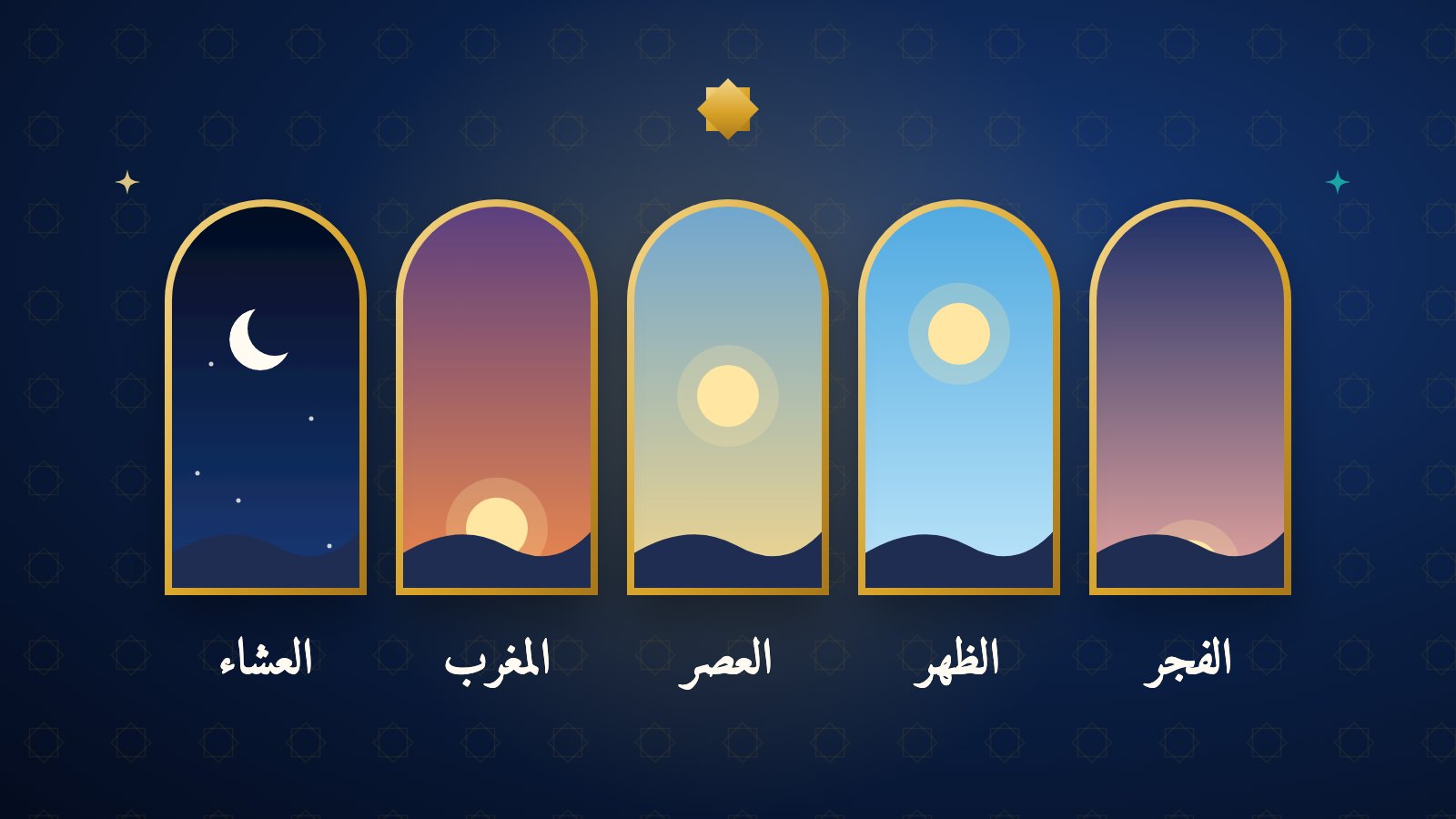
Prayer is the second pillar of Islam and the daily meeting between a Muslim and Allah. Allah says: إِنَّ ٱلصَّلَوٰةَ كَانَتْ عَلَى ٱلْمُؤْمِنِينَ كِتَٰبًا مَّوْقُوتًا, "Indeed, prayer has been prescribed for the believers at fixed times" (An-Nisa, 4:103). Here are the five prayers, in the order of the day.
The five prayers
- Fajr (الفجر): 2 rak'ahs. From the first light of dawn until sunrise.
- Dhuhr (الظهر): 4 rak'ahs. Just after midday, once the sun has passed its highest point.
- Asr (العصر): 4 rak'ahs. In the afternoon, and it should be prayed before the sun turns yellow and low.
- Maghrib (المغرب): 3 rak'ahs. Just after sunset.
- Isha (العشاء): 4 rak'ahs. Once the red glow of sunset has gone and night has fallen.
That makes 17 obligatory rak'ahs a day, and Al-Fatihah is recited in every one of them. Prayer times move through the year with the sun, so use a timetable from your local mosque or a trusted prayer-times app for your city.
Out loud or quietly
In Fajr, and in the first two rak'ahs of Maghrib and Isha, the imam recites aloud. In Dhuhr and Asr, the recitation is silent.
Building the habit
- Tie each prayer to the day: Fajr before breakfast, Dhuhr in the lunch break, Maghrib before dinner.
- Turn on the adhan in a prayer app, so the time is never a surprise.
- Pray together at home when you can. Children learn the movements by standing next to you.
- Start children early and gently: many families begin around the age of seven, praising effort rather than expecting perfection.
Learning the meaning of what you recite makes every prayer richer. Our Islamic studies and Quranic Arabic courses go through the words of the prayer step by step.
Learn it with a teacher
Islamic studies (Fiqh & Aqeedah)Essential knowledge for every Muslim: belief, worship and character.
Ready to start learning?
Book a free 30-minute lesson with a qualified teacher. No card needed.