
In this article
The word ال (al) means "the", and it appears on almost every line of the Quran. Sometimes you hear its "l", and sometimes it disappears into the next letter. Which one happens depends only on the first letter of the word after it.
Moon letters: the "l" is pronounced
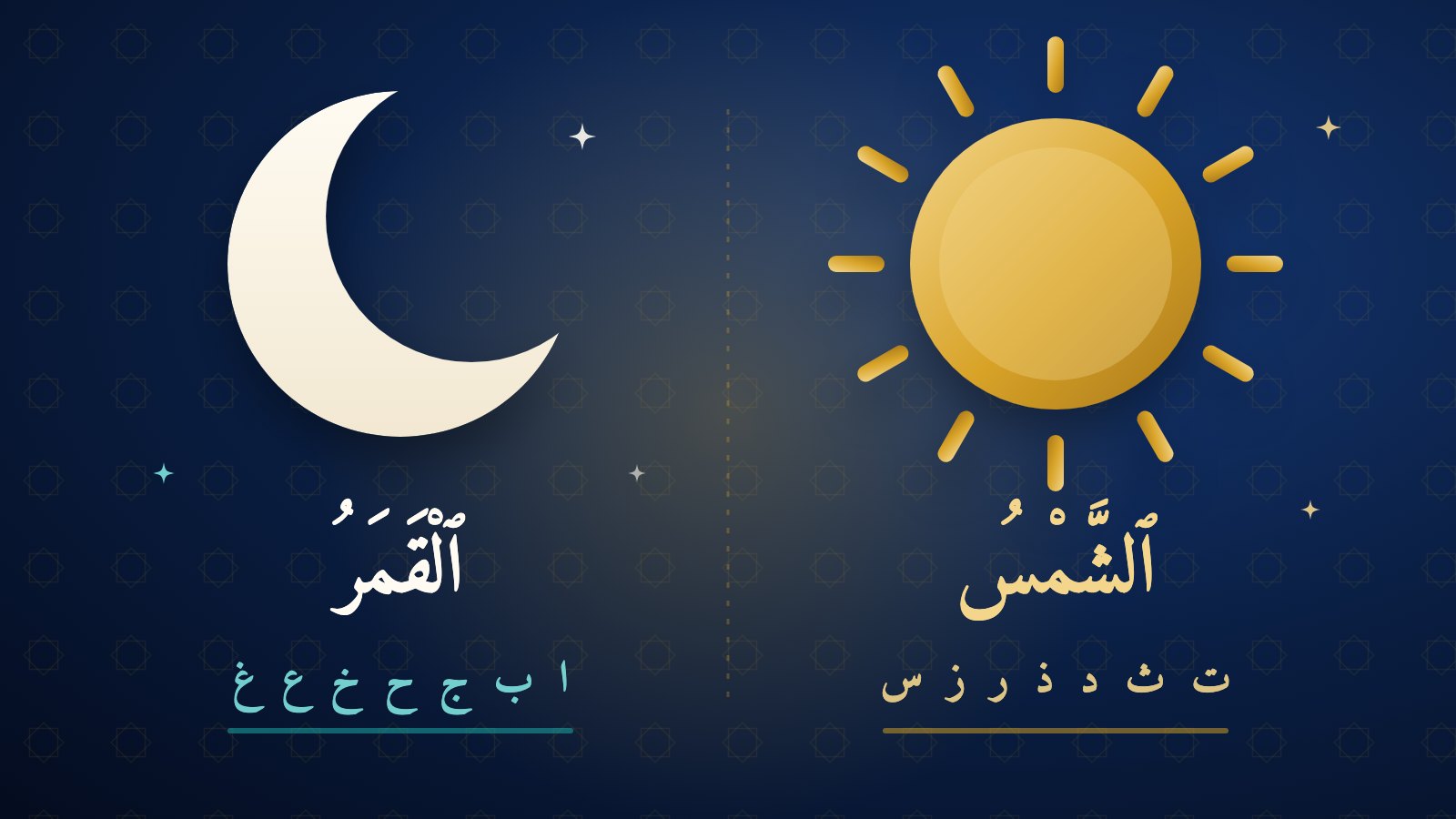
Before a moon letter, you say the lam clearly, with a sukoon: ٱلْقَمَرُ (al-qamar), the moon. The fourteen moon letters are:
ا ب ج ح خ ع غ ف ق ك م ه و ي
Arabic teachers remember them with the phrase اِبْغِ حَجَّكَ وَخَفْ عَقِيمَهُ, which contains every one of them.
Sun letters: the "l" disappears
Before a sun letter, the lam is written but not pronounced. Instead, the sun letter is doubled: ٱلشَّمْسُ (ash-shams), the sun, not "al-shams". The fourteen sun letters are:
ت ث د ذ ر ز س ش ص ض ط ظ ل ن
A handy hint: most sun letters are made with the tip of the tongue, close to where the lam itself is made, so the lam blends into them.
Spot it in Al-Fatihah
- Moon: ٱلْحَمْدُ (al-hamdu), ٱلْعَٰلَمِينَ (al-ʿalamin), ٱلْمُسْتَقِيمَ (al-mustaqim).
- Sun: ٱلرَّحْمَٰنِ (ar-Rahman), ٱلدِّينِ (ad-din), ٱلصِّرَٰطَ (as-sirat).
The quick check in the Mushaf
Look at the letter after the lam. If the lam has a sukoon, say it. If the lam has no mark and the next letter has a shaddah, skip the lam and double the letter.
Practise it
- Sort ten words from the surah you are learning into two lists, sun and moon.
- Read them aloud, then check each one against the marks in the Mushaf.
- Children enjoy a card game: draw a letter and say "sun" or "moon".
In our Noorani Qaida and tajweed lessons, this is one of the first rules your teacher checks, because it comes up in every surah you read.
Ready to start learning?
Book a free 30-minute lesson with a qualified teacher. No card needed.