
In this article
Pronouns are among the most frequent words in any language. In Arabic they come in two kinds: separate words that stand on their own, and short endings attached to other words. Learn both, and a large part of every ayah suddenly becomes clear.
Separate pronouns
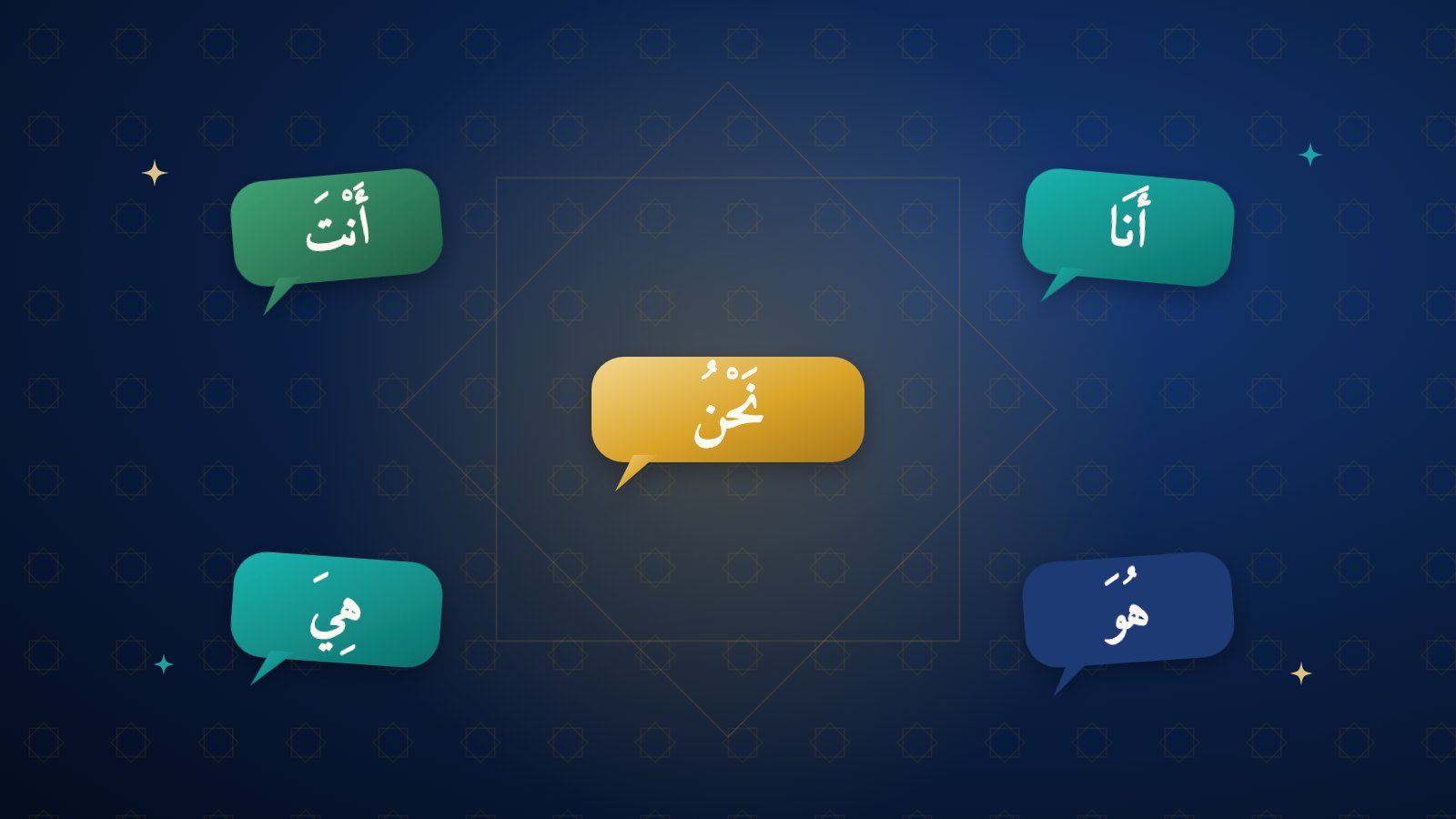
- أَنَا (ana): I
- أَنْتَ (anta): you, speaking to a man
- أَنْتِ (anti): you, speaking to a woman
- هُوَ (huwa): he
- هِيَ (hiya): she
- نَحْنُ (nahnu): we
- أَنْتُمْ (antum): you, to a group
- هُمْ (hum): they
Arabic also has forms for two people and for groups of women, which you will meet later.
Attached endings
Added to the end of a noun, a short ending shows who something belongs to. With كِتَاب (book):
- كِتَابِي: my book (ـي)
- كِتَابُكَ: your book, to a man (ـكَ)
- كِتَابُكِ: your book, to a woman (ـكِ)
- كِتَابُهُ: his book (ـهُ)
- كِتَابُهَا: her book (ـهَا)
- كِتَابُنَا: our book (ـنَا)
Spot them in Al-Fatihah
- إِيَّاكَ نَعْبُدُ: the ـكَ in إِيَّاكَ means "You", so the phrase means "You alone we worship". The "we" is inside the verb نَعْبُدُ itself.
- ٱهْدِنَا: the ending ـنَا means "us": "guide us".
- عَلَيْهِمْ: the ending ـهِمْ means "them": "upon them".
Practise it
- Point and say: أَنَا for yourself, هُوَ and هِيَ for people in the room.
- Take five things you own and say them with ـي: كِتَابِي، بَيْتِي.
- Look for ـنَا in the duas of the Quran: رَبَّنَا means "our Lord".
Pronouns build on the three kinds of Arabic words: every pronoun is an ism. Our Quranic Arabic course teaches them through the surahs you already recite.
Ready to start learning?
Book a free 30-minute lesson with a qualified teacher. No card needed.