
Numbers are one of the easiest and most useful places to start learning Arabic. You will hear them in the market, see them at the end of every ayah in the Mushaf, and use them every day.
Zero to ten
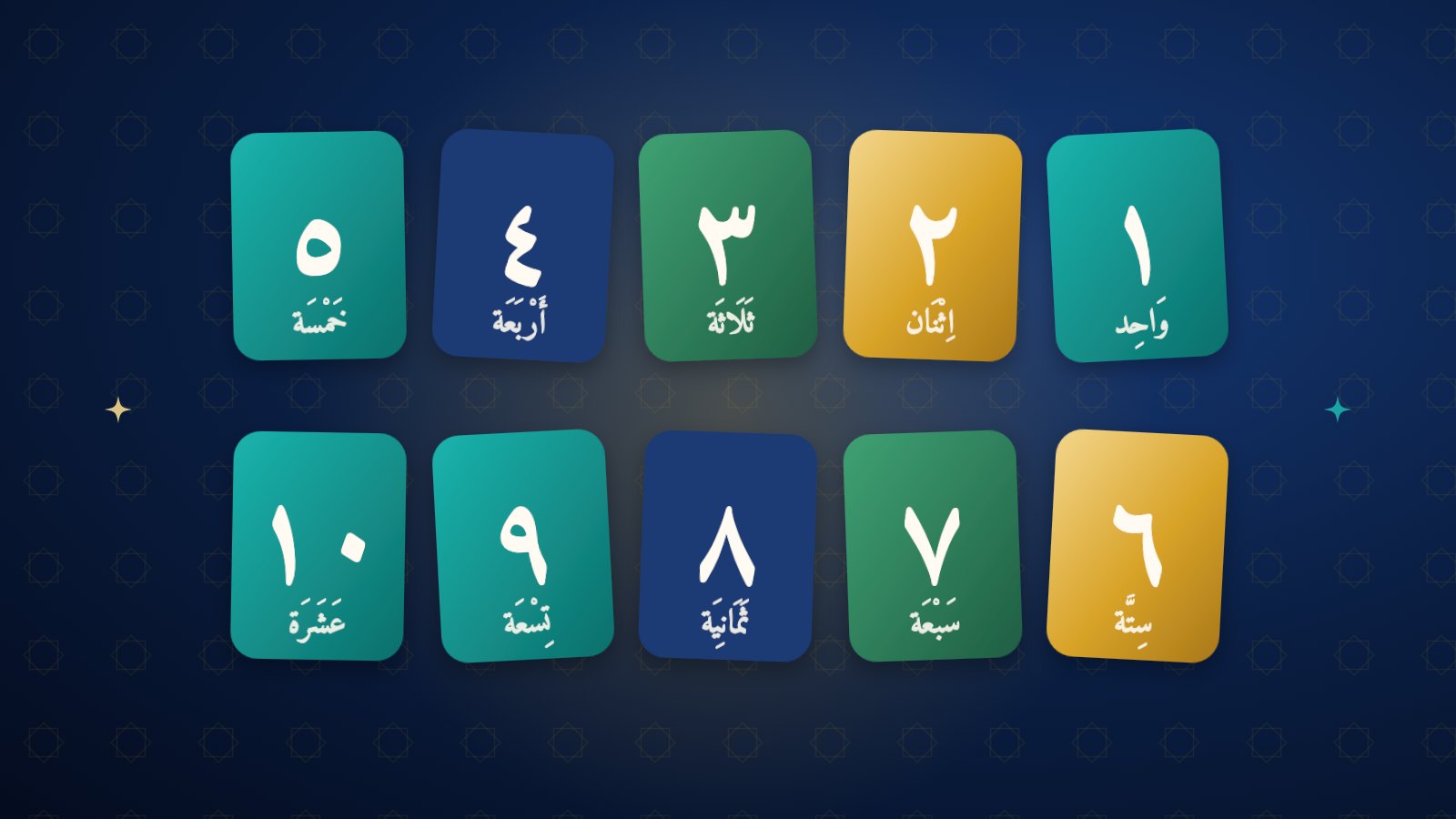
- Zero: صِفْر (sifr), written ٠. The English words "zero" and "cipher" both come from it.
- One: وَاحِد (wahid), written ١
- Two: اِثْنَان (ithnan), written ٢
- Three: ثَلَاثَة (thalathah), written ٣
- Four: أَرْبَعَة (arbaʿah), written ٤
- Five: خَمْسَة (khamsah), written ٥
- Six: سِتَّة (sittah), written ٦
- Seven: سَبْعَة (sabʿah), written ٧
- Eight: ثَمَانِيَة (thamaniyah), written ٨
- Nine: تِسْعَة (tisʿah), written ٩
- Ten: عَشَرَة (ʿasharah), written ١٠
Two ways to write the digits
In much of the Arab world, and in the Mushaf, the digits are written ٠ ١ ٢ ٣ ٤ ٥ ٦ ٧ ٨ ٩. In North Africa and most of the world, the digits 0 to 9 are used; in English they are called Arabic numerals, because they reached Europe through Arabic books of mathematics. Either way, a number is written with its largest digit first on the left, even inside right-to-left Arabic text: ١٥ is fifteen.
A note on grammar
Arabic numbers change with what you count. From three to ten, the number takes the opposite gender of the thing counted: ثَلَاثَةُ أَيَّامٍ, three days (يوم is masculine), but ثَلَاثُ لَيَالٍ, three nights (ليلة is feminine). Both phrases appear in the Quran. There is no need to master this at the start: learn the counting forms first.
Practise with children
- Count everyday things in Arabic: the stairs, the dates at iftar, the buttons on a coat.
- Open the Mushaf and read the ayah numbers aloud in Arabic.
- Play "what comes next": you say a number and they say the next one.
- Count the rak'ahs of each prayer: Fajr ٢, Maghrib ٣, and the others ٤.
Our Modern Standard Arabic course starts from everyday words like these and builds up to reading, writing and conversation.
Learn it with a teacher
Modern Standard ArabicRead, write, listen and speak: the Arabic of books, news and study.
Ready to start learning?
Book a free 30-minute lesson with a qualified teacher. No card needed.