
In this article
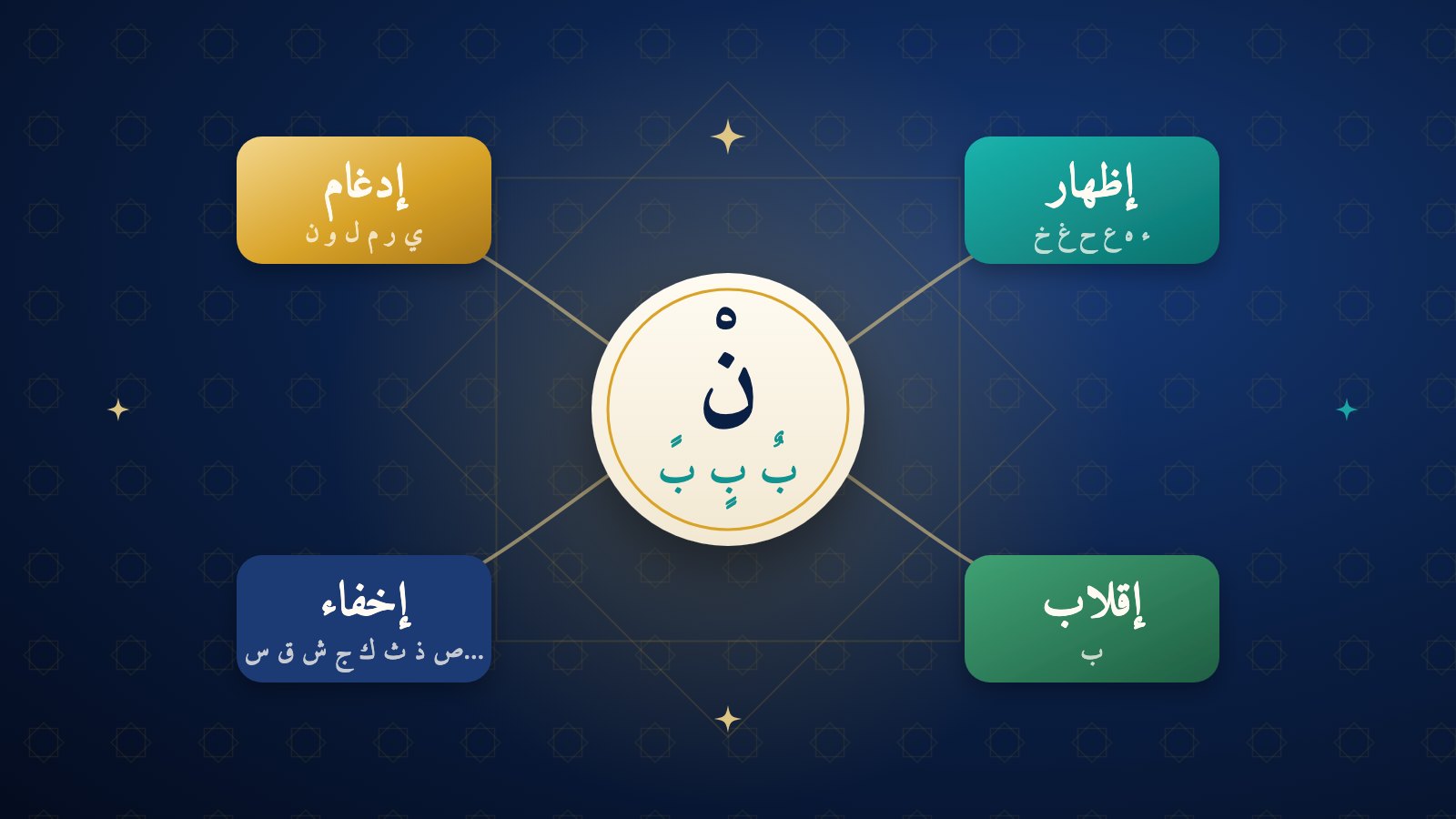
A noon sakinah is a noon with a sukoon (نْ). Tanween is the doubled vowel at the end of a word (ـً ـٍ ـٌ), and it is pronounced like a noon sakinah. How either is read depends on the letter that comes after it, and there are four rules.
1. Izhar: pronounce it clearly
Before the six throat letters ء ه ع ح غ خ, the noon is pronounced clearly, without ghunnah (nasal sound). For example: مَنْ آمَنَ and عَذَابٌ أَلِيمٌ.
2. Idgham: merge it
Before the letters of the word يَرْمَلُون, the noon merges into the next letter:
- With ghunnah before ي ن م و, as in مَن يَقُولُ.
- Without ghunnah before ل ر, as in مِن رَّبِّهِمْ.
Idgham only happens between two words. Inside a single word, such as الدُّنْيَا, the noon is pronounced clearly.
3. Iqlab: change it
Before ب, the noon turns into a hidden meem, with ghunnah, as in مِنْ بَعْدِ. Many Mushafs mark this with a small meem.
4. Ikhfa: hide it
Before the remaining fifteen letters, the noon is hidden: between clear and merged, with a ghunnah held for about two counts, as in مِن قَبْلِ and أَنتُمْ.
How to practise
- Learn the letter groups first: six for izhar, the six of يرملون, one for iqlab, and the rest for ikhfa.
- Read slowly, and say the rule to yourself each time you meet a noon sakinah or tanween.
- Recite to a teacher. Tajweed is learned by listening and being corrected, not only by reading about it.
Ready to start learning?
Book a free 30-minute lesson with a qualified teacher. No card needed.